Author:adminFrom未知
Date:2020-02-26 11:18
1. introduction
White LED (WLED) is a new generation of solid-state green light source. It has many advantages, such as energy-saving, environmental protection, small size, high luminous efficiency, stable performance and so on.
There are three paths for WLED to realize white light by PC / MC: 1) blue LED chip + yellow phosphor; 2) purple LED chip + Red + Green + blue phosphor; 3) blue LED chip + green LED chip + Red LED chip. Among the three ways to realize white light, the most economical and practical way is to coat blue LED chip with yellow phosphor. The efficiency of WLED using this way is as high as 250lm/W. With the increasingly fierce market competition of lighting terminal products and the worse and worse heat dissipation environment of lighting fixtures, LED light source must have better thermal characteristics to meet the market demand. The thermal characteristics of LED light source are usually characterized by the cold / heat ratio of the optical output. The output heat-cold ratio of WLED, that is, the ratio of photoelectric parameters (luminous flux) at high temperature to the electrical parameters (luminous flux) at room temperature, can be used to verify the thermal stability of LED light source.
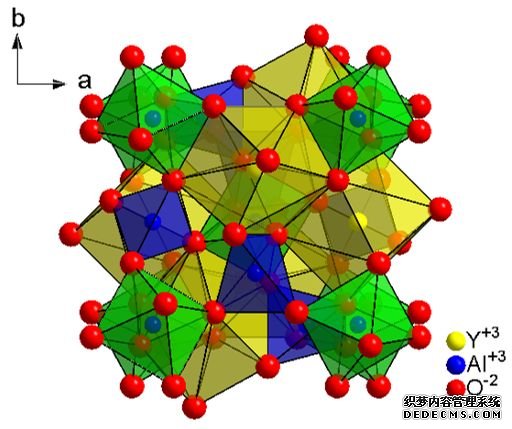
In the WLED light source, phosphor plays an important role in the realization of white light. Phosphors are generally inorganic luminescent materials with ordered crystal structure. The stability of their physical and chemical properties is related to the following factors: material system, dispersion coefficient, compatibility of powder and glue, powder morphology. The influencing factors of the cold-heat ratio of the WLED light output are related to the materials of the WLED devices, and the fluorescent materials are the key materials of the above devices. The effect of phosphor physical properties (material system, dispersion coefficient, compatibility of powder and glue, morphology of powder) on the cold-heat ratio of WLED light output has not been reported. At the same time, it is very important to solve the problem of thermal characteristics of LED light source. It also plays a guiding role in subsequent product design.
2. experimental part
In this paper, SMD 2835 is used as a package. Blue chip emits from 450 nm to 455 nm. Each LED source has three LED chips in series. The phosphor scheme consists of YAG yellow fluorescent material, nitride red fluorescent material and Ga-YAG/LuAG yellow-green fluorescent material. Each group of experiments only changed the type of yellow and green powder and fixed the amount of glue and the other two phosphor content, and each LED light source has the same amount of dispensing. The ratio of yellow, red and yellow-green phosphors to glue is yellow: red: yellow-green: glue = 0.50:0.15:1.5:1. Five samples with the same phosphor ratio are selected for testing. The testing conditions are pulse current 100 mA, testing temperature is 25, 50, 75, 85, 95, 105 C, and the luminous flux is flat. Mean value. Powder parameters testing equipment: particle size using laser particle size analyzer testing, thermal quenching performance, excitation emission spectrum using Fluoromax-4 testing; particle SEM morphology using scanning electron microscopy testing; packaging equipment: ASM crystallizer, ASM welding wire machine, vacuum defoamer, Tibetan dispensing machine. Packaging products photoelectric parameters test equipment: remote integration sphere tester.
3. results and discussion
Phosphors are generally inorganic materials. According to their matrix classification, the commonly used systems are aluminates, nitrides / nitrogen oxides, silicates, fluorides and so on. Fig. 1.1 The thermal quenching properties of phosphors with different systems show that aluminates have the best thermal stability, fluorides and silicates have the worst thermal stability, nitrides have the worse thermal stability than aluminates but are superior to fluorides and silicates.


 ADD:Jinhua Building,No.4 Fuqing Road,Yongxing Industry Park,
Henglan Town,Zhongshan City,China
ADD:Jinhua Building,No.4 Fuqing Road,Yongxing Industry Park,
Henglan Town,Zhongshan City,China
 Mob/WhatsApp/Wechat:+86-186 6619 2649
 Email:info@lonvenlighting.com
 Skype:wy88lover
 QQ:710792104

 service hotline:+86 760-23690308